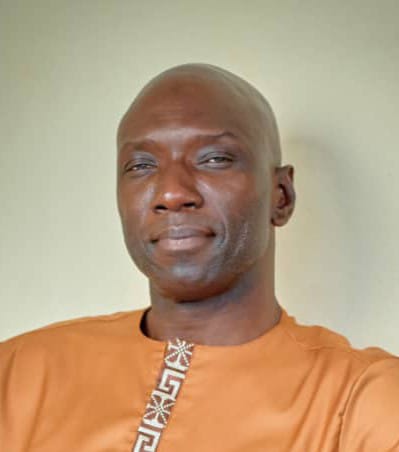
By Dr. Ousman Gajigo
The head of the National Road Authority (NRA), Mr. Sulayman S. Janneh, was recently quoted in the press blaming the country’s road deficit on the previous regimes of Yahya Jammeh and Dawda Jawara, and claiming that there are better standards under the Adama Barrow regime. The Gambia certainly has a major roads problem. It is reflected in both quality and quantity – though Mr. Janneh chose to attribute only the quantity deficit to his boss’s predecessors.
First, it is worth explaining why Mr. Janneh’s remarks warrant a response even though the head of the NRA is supposed to be a non-political office. We all know that roads are a central pillar of President Barrow’s bid for a third term. By explicitly drawing a contentious comparison between road development under the Barrow administration and previous governments, Mr. Janneh has ventured into political territory. He is essentially touting the purported achievements of the current regime rather than confining himself to the technical aspects of the NRA’s mandate. Political statements of this kind are expected from President Barrow and his political appointees. What is more surprising – and unfortunately an increasingly common occurrence – is seeing supposedly non-political appointees making similar forays.
With that said, let us unpack Mr. Janneh’s claims. It is true that far more infrastructure development could have occurred under both Yahya Jammeh and Dawda Jawara than what actually transpired. One can therefore criticize both governments on the quantity of infrastructure delivered. However, there is far more to criticize the Adama Barrow regime for when it comes to infrastructure – in both quantity and quality.
The Adama Barrow administration has attempted to take credit for infrastructure it has little claim to. The largest single infrastructure project completed under this government is the Senegambia Bridge. But the design and construction of that bridge began years before Adama Barrow came to power. The project reached the concept stage at the African Development Bank in 2012. He cannot credibly claim credit for it.
Another major infrastructure milestone this government frequently highlights is the OIC road. This project was indeed conceived and constructed under this administration, and it deserves credit for that. But those who take credit must also take responsibility where it is due. This road was constructed without a proper plan. Major reconstructions and alterations had to be carried out after entire sections were already completed, driving up costs unnecessarily. The roundabout at Bijilo, near the Kasumai Beach entrance, is one example. Another is the poorly positioned pedestrian crossings placed dangerously close to roundabouts. What does this say about the competence of those in charge?
Mr. Janneh also mentioned a planned road between Sting Corner and Mandinaba. Anyone who has given even a moment’s thought to the roads situation in The Gambia knows that this route is badly needed. Indeed, members of this administration spoke about this planned road some years ago. Yet the government has done nothing to demarcate the corridor through which the road is meant to run. On almost any given day, new compounds and structures are being built in that whole area. As a result, when the road is eventually constructed, the cost will be far higher than necessary due to avoidable displacement and compensation. In areas such as Lamin, Abuko, Talinding, and elsewhere, compounds have already expanded into swamps.
The government may not yet have secured the financing to build the road. But nothing prevents the authorities from demarcating the future highway corridor now. Doing so would not only keep eventual construction costs down, but would also support better urban planning and allow complementary infrastructure – such as transmission lines and water pipes – to be planned efficiently.
The absence of such basic steps exposes a fundamental shortcoming of this government: the lack of a roads masterplan. A masterplan provides a blueprint for how roads in an urban region will be expanded over the long term. Without one, road construction becomes a series of disjointed activities with no coherent strategy – and some of those roads may actually hinder future development rather than support it. Much like in the electricity sector, President Adama Barrow approaches road construction cynically, as an electoral strategy rather than a genuine infrastructure program. This is evident in his busy schedule of hopping from one foundation-stone-laying ceremony to another.
Another major failure of this government is the debacle surrounding the Senegambia Bridge – arguably the single greatest blunder by any government in the transport sector in West Africa. The estimated value of the bridge is $500 million. Yet this government mortgaged it for less than $100 million, representing a loss of roughly $400 million.
To grasp the scale of that loss: $400 million is equivalent to approximately 80% of the government’s total annual budget. That sum could have financed all the roads Adama Barrow so proudly touts, without borrowing a single dollar. Instead, his administration surrendered that value in a poorly negotiated deal and then embarked on a borrowing spree. The result of that heavy debt burden is a handful of poorly constructed roads.
So while the governments of Dawda Jawara and Yahya Jammeh may not have delivered all the road infrastructure they could have, they never committed a blunder of this magnitude in the transport sector. If Mr. Janneh wishes to compare the successes and failures of different regimes, why should we conveniently overlook the far more recent – and far more costly – failures of his current boss?