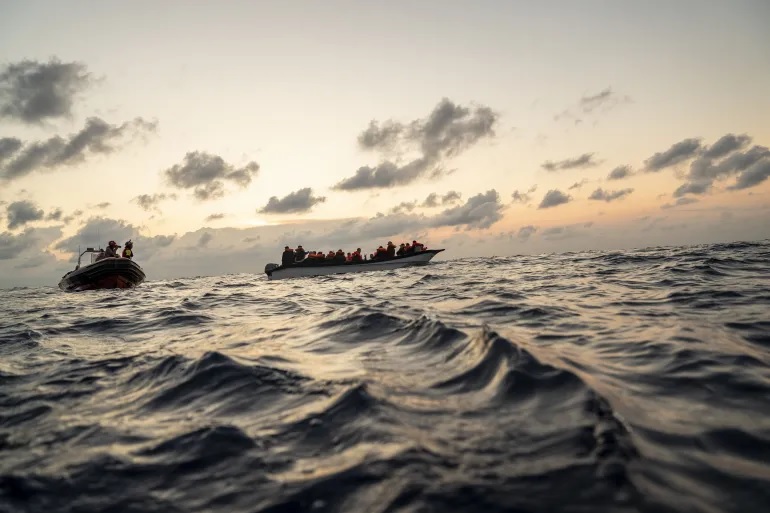
New data reveals a devastating human cost in the first four months of 2026, as Gambian migrants continue to risk everything on dangerous irregular journeys toward Europe, with at least 131 lives lost and hundreds more missing.
According to migration monitoring records compiled by Ebrima Migrants Situation, 117 Gambians drowned in the Mediterranean and Atlantic waters, while 14 died during overland treks through the Sahara or transit countries. The figures underscore the persistent perils of the so-called “back way” migration, despite intensified international efforts to curb irregular crossings.
Four migrant boats carrying exclusively or predominantly Gambian passengers have vanished without a trace since January, raising fears for 740 African migrants in total. The missing vessels include a boat that departed from Batokunku on February 6 with 160 people aboard; two boats that left Kartong on March 29, carrying 210 and 180 migrants, respectively; and one vessel from Tanji on March 29 with 190 passengers.
Authorities have recorded 254 Gambian migrants missing at sea so far this year.
Despite the tragedies, thousands have reached European shores. A total of 1,860 migrants who departed from Gambian coasts arrived in Spain, among them 743 Gambians who made the crossing in 13 different boats. Another 173 Gambians reached Italy from Libya and Tunisia aboard nine vessels.
Interceptions remain high. Gambian nationals featured prominently in eight major operations, with 2,553 migrants stopped across various routes: 147 in two boats intercepted in Gambian waters, 259 in four boats off Senegal, and 390 in four boats near Morocco. An additional 574 Gambians were among those detained. Security forces arrested 1,589 would-be migrants in The Gambia before they could even depart.
Voluntary and forced returns have also increased. In the period under review, 574 Gambians were deported or self-returned from several European and North African countries: 234 from Libya, 180 from Mauritania, 74 from Morocco, 39 from Italy, 38 from Germany, six from Sweden, one from Spain, and others. Separately, 396 Gambians returned home independently from eight different countries.
The data paints a complex picture of desperation, resilience, and loss. While some migrants succeed in reaching Europe, the human and economic toll on Gambian families and communities continues to mount.
Rights groups and local observers are calling for stronger investment in youth employment, safer legal migration pathways, and enhanced regional cooperation to stem the deadly flow.
As the Mediterranean crossing season intensifies, advocates warn that, without urgent interventions, the grim statistics from early 2026 may foreshadow an even deadlier year.