By: Sainabou Sambou
President Adama Barrow on Sunday inaugurated the newly completed Bani-Salikeni Road in Njaba Kunda, hailing the project as a key step in his administration’s drive to enhance connectivity, stimulate economic growth and uplift communities across the North Bank Region.
The ceremony formed part of the North Bank Region General Meeting, held under the theme “Connecting Communities, Transforming Lives.” Speaking at the event, President Barrow stressed that the government’s recent work in the region went beyond road construction. It aimed to improve service delivery, living standards and development opportunities.
“It is about keeping faith with the people of the North Bank Region as citizens of this beloved country,” he said.
The 16-kilometer Bani-Salikeni Road is now fully open to the public. Barrow said it would improve access to social services, boost local economic activity and strengthen security and safety for residents along the route. He described the attention his government has given the North Bank Region as “unprecedented” after decades of relative isolation.
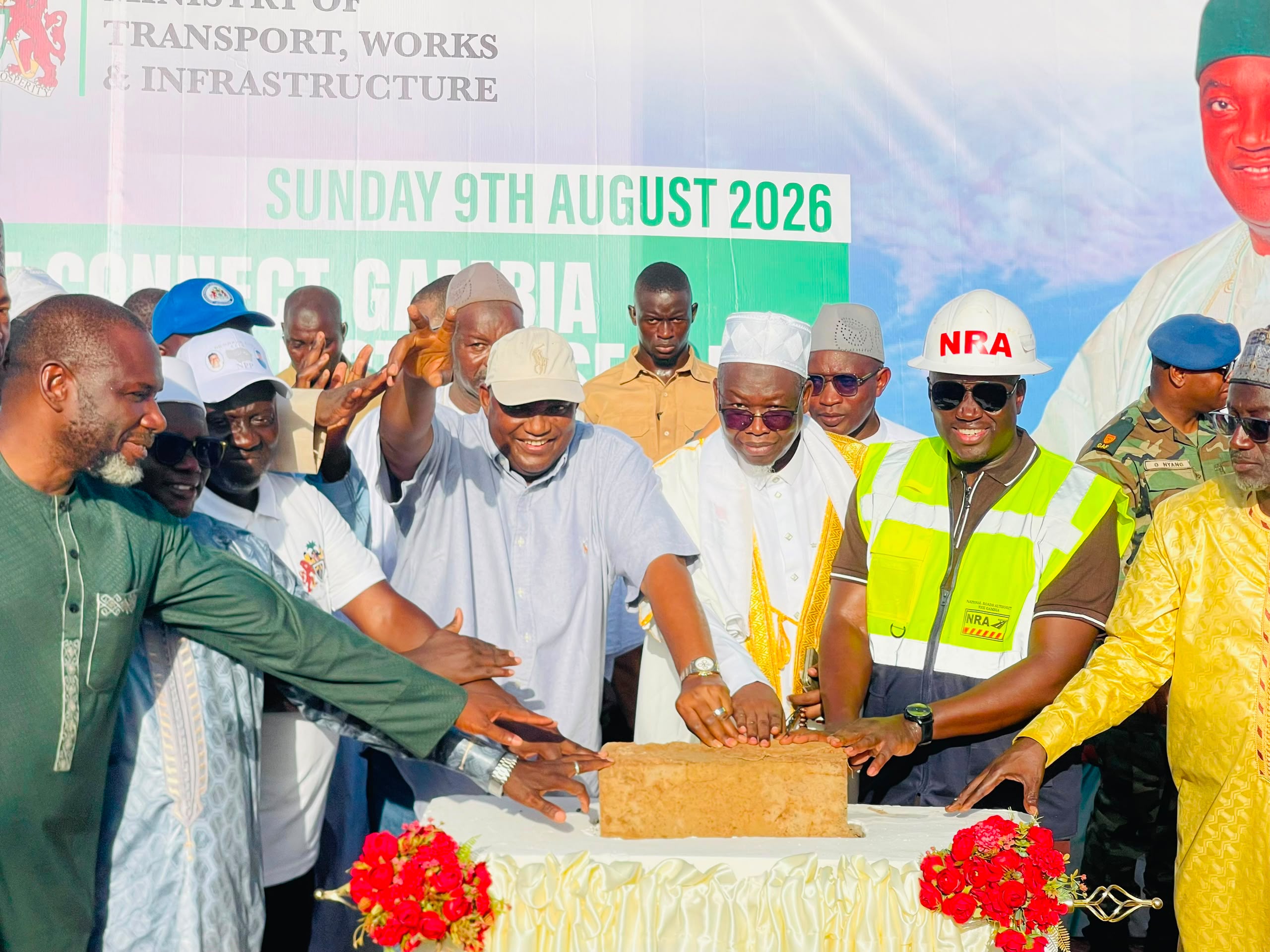
Within two days, he noted, projects had been launched in communities including Barra, Bakalarr, Jurunku, Ndugu Kebbeh, Kerr Omar, Daru Rilwan and Tankonjala. Foundation stones were also laid for a 100-kilometer road project linking Daru Rilwan and Tankonjala.
“These activities are not a mere coincidence. They are results of a strategic approach designed to advance the cause of all Gambians,” the President said. He reassured residents that the new roads would unlock further connectivity and development. He urged communities to take ownership of the infrastructure, protect it and use it to improve livelihoods, especially for the next generation.
Barrow specifically called on young people to seize the opportunities the roads create. “New roads bring new businesses, new customers, and new possibilities,” he said, encouraging entrepreneurship and innovation. He pledged that more roads and bridges would be built nationwide and praised the National Roads Authority and contractors for delivering durable infrastructure.
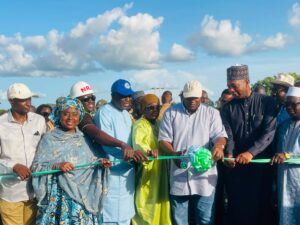
Minister of Transport, Works and Infrastructure Ebrima Sillah confirmed the Bani-Salikeni–Kenye Tunjabakunda Road measures approximately 17 kilometers and has been handed over to the community. The project was fully funded by the Government of The Gambia through the Ministry and the National Roads Authority, and constructed by Gambian contractor Mrs. Senghor Bajan, a former Director of Technical Services at the Ministry.
Sillah described the completion as a fulfilling moment after years when the route was extremely difficult to travel. “Today, Alhamdulillah, the road is complete from end to end, and the people are happy that the road is ready,” he said. The road features a wide carriageway, pedestrian walkway, strong base and double-surface finish. He urged motorists to drive carefully to preserve the asset.
The minister clarified that the government currently plans 355.6 kilometers of roads in the North Bank Region, a figure that could rise to around 360 kilometers as communities submit further requests.
Additional roads, including the Kaur Karolwath Road and the 23-kilometer Karantaba Fidufula Road, are due for inauguration soon, with more openings expected before December. He defended the quality of the Bani-Salikeni road as reflecting the high standard applied in rural areas, adding: “Criticism is free. Opinions are free. Facts are sacred.”
Residents welcomed the development. Yaya Suwareh of Badibu Karewan said the previous poor road had caused significant hardship. “When we heard that the President wanted to construct the road, we were very happy because we know the hardship we have been facing,” she said. Suwareh noted the road had not been built under the previous two administrations and described the completed project as “like gold” for the community, promising easier movement and greater development.
The inauguration underscores the government’s stated commitment to transforming connectivity in one of The Gambia’s historically underserved regions.