Isatou Fatty Deserved Better
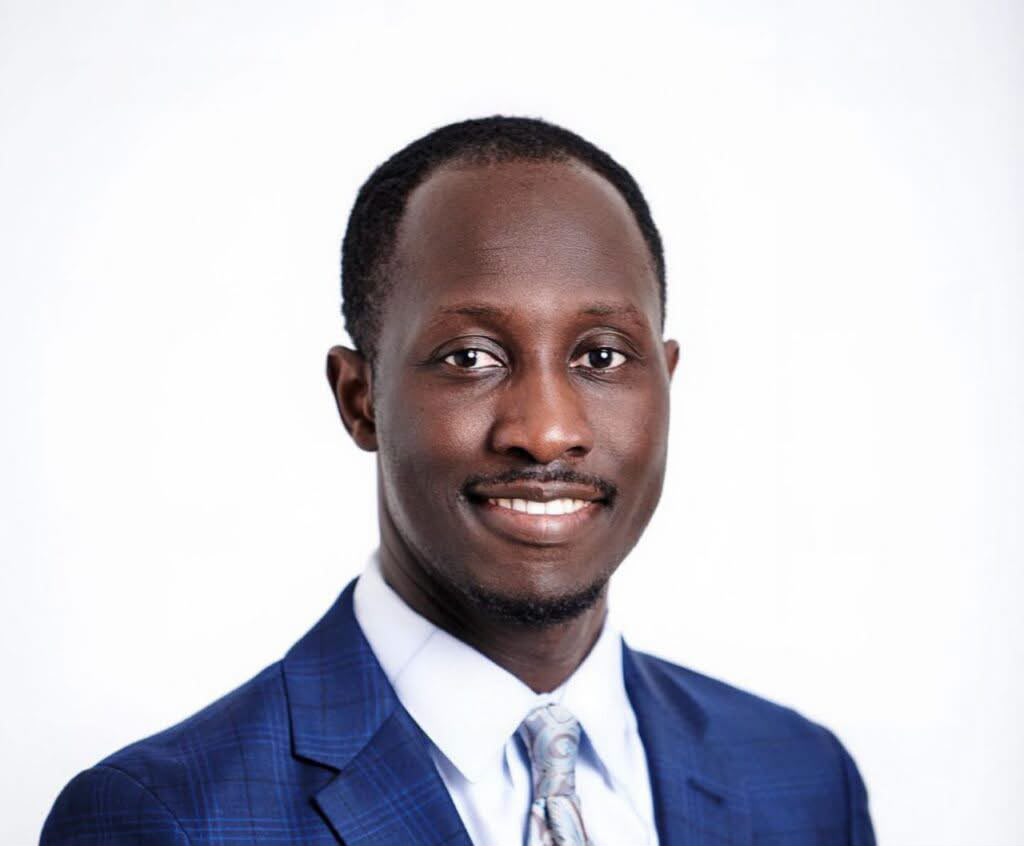
By Sarjo Barrow, Esq.
No criminal justice system is perfect, even in advanced countries. With limited resources and little modern technology, our police deserve credit for the cases they solve. That is why a story shared this week on the What’s On Gambia page, and reported earlier by The Point, should trouble us all. Two men accused of murder walked out of court because the State never formally charged them.
On the morning of December 20, 2025, Isatou Fatty, 21, was stabbed to death inside the Heewal Forex Bureau at Brusubi Turntable. Within weeks, police arrested two men and charged them with murder. The case went to the High Court. Then, for months, the State filed no indictment.
On March 5, 2026, Justice Janneh ordered the State to file one within 30 days. It did not. Relying on the Chief Justice’s Practice Direction, which permits release when no indictment is filed within 60 days of a transfer, she granted bail and gave the State one more chance. On May 5, with still nothing on file, she discharged both men and struck out the case for lack of diligence.
The court did its job. Under our Constitution, no one may be held indefinitely on a charge the State will not file. Too often, when a serious case collapses, prosecutors say the evidence was the police’s responsibility, and the police say the case left their hands once the file reached the Ministry of Justice. Under our law, both answers are true, and that is the problem. When each side can fairly point to the other, no one answers to Isatou’s family.
A colonial design
Much of the answer lies in the Police Act of 1949, in force since January 1, 1950, and last meaningfully amended in 1963. It charges the police with “the prevention and detection of crime” (§ 4) and allows any officer to “conduct in person any prosecution before a court of summary jurisdiction” (§ 28). It never mentions the Attorney General or the Director of Public Prosecutions.
That design made sense in a colony with few trained lawyers. That reason is gone. The University of The Gambia’s Faculty of Law has trained lawyers since 2006, and the Gambia Law School held its first call to the Bar in January 2013. We now have the lawyers. What we lack is a law that puts them to work where cases are won or lost: in the investigation. And no institution should be asked to grade its own investigation in court.
The 2025 reform kept the old model
The Criminal Procedure Act, 2025 modernized much of the 1933 law it replaced, and even promised “reasonable timelines” for the prosecution. Yet the Act still lets police prosecute summary cases (§ 77(b)), gives prosecutors no power to direct an investigation, and sets no deadline for filing an indictment in the High Court (§ 225). Meanwhile, police must bring a suspect to court within 72 hours “whether or not the police inquiries are completed” (§ 30(4)). So murder charges are sometimes filed before the evidence exists, and the prosecutor inherits a file built for arrest, not for trial.
Other systems handle this pressure differently. In the United States, federal prosecutors must file an indictment within 30 days of arrest (18 U.S.C. § 3161(b)). When an investigation is still incomplete but a suspect poses a real danger, prosecutors there often charge a lesser offense they can already prove, such as unlawful possession of a weapon. They then ask the court to detain the suspect or set strict bail conditions, pointing to “the nature and seriousness of the danger” the person poses (18 U.S.C. § 3142(g)(4)). The more serious charge comes later, once the evidence is in hand.
We have seen what happens when we do the reverse. In the case against Lieutenant Colonel Sanna Manjang, the State began with murder charges in January 2026. By July, it had replaced them with two counts of assault. Whatever the merits of that case, which are for the court to decide, charging the gravest offense first and finding the evidence later serves neither victims nor the accused. The Jammeh years are behind us. Arrest should follow investigation, not precede it.
Others have solved this
In the United States, the Attorney General oversees the FBI, and federal law lets the Attorney General appoint officials “to detect and prosecute crimes” (28 U.S.C. § 533(1)). Many state prosecutors employ their own sworn investigators; California treats a district attorney’s investigator as a peace officer (Cal. Penal Code § 830.1(a)). Scotland’s prosecutors direct police investigations into serious crime, and even in England, where police investigate, prosecutors decide the charge in serious cases. Closer to home, Kenya’s Office of the Director of Public Prosecutions Act, 2013 gives the DPP power to direct the IGP to investigate (§ 5(1)(a)). Kenya has shown it can be done, and we can learn from its example.
What the National Assembly should do
The Attorney General should be our chief law enforcement officer in fact, not only in public expectation. The Constitution makes the Attorney General the Government’s “principal legal adviser” (§ 72(2)) but gives the office no role in investigations. The Assembly need not wait for a new constitution. Police functions are left to “an Act of the National Assembly” (§ 178(2)), and with two draft constitutions rejected, ordinary legislation is the practical path. I respectfully propose three changes.
First, give the prosecuting authority the power to direct any criminal investigation, with police required to comply and report back. Because our Attorney General also serves as Minister of Justice, until the Constitution separates those roles, this power should rest with the DPP, a career public servant with security of tenure. Any direction should be in writing, with reasons, and reviewed yearly by a National Assembly committee that includes opposition and independent members, in camera where national security requires.
Second, assign a state counsel to every murder, rape and armed robbery investigation from the start, to ensure evidence is gathered and preserved for trial. No murder charge should be filed without a prosecutor’s review.
Third, write real deadlines into the Criminal Procedure Act: a fixed period for police to deliver a complete file, and 60 days for the State to file its indictment, with extensions only on sworn cause.
Accountability on both sides
None of this weakens the police. It gives them a partner, and tells the public whom to hold to account when a case fails.
Law and order is a must. But law and order means cases that reach a verdict, not cases that die on a court calendar. Isatou Fatty deserved better. The next family deserves better, and the National Assembly has the power to deliver it.
Sarjo Barrow, Esq. writes in his personal capacity. The views expressed here are his own and do not represent those of his employer or of the Government.