By: Aja Beyai
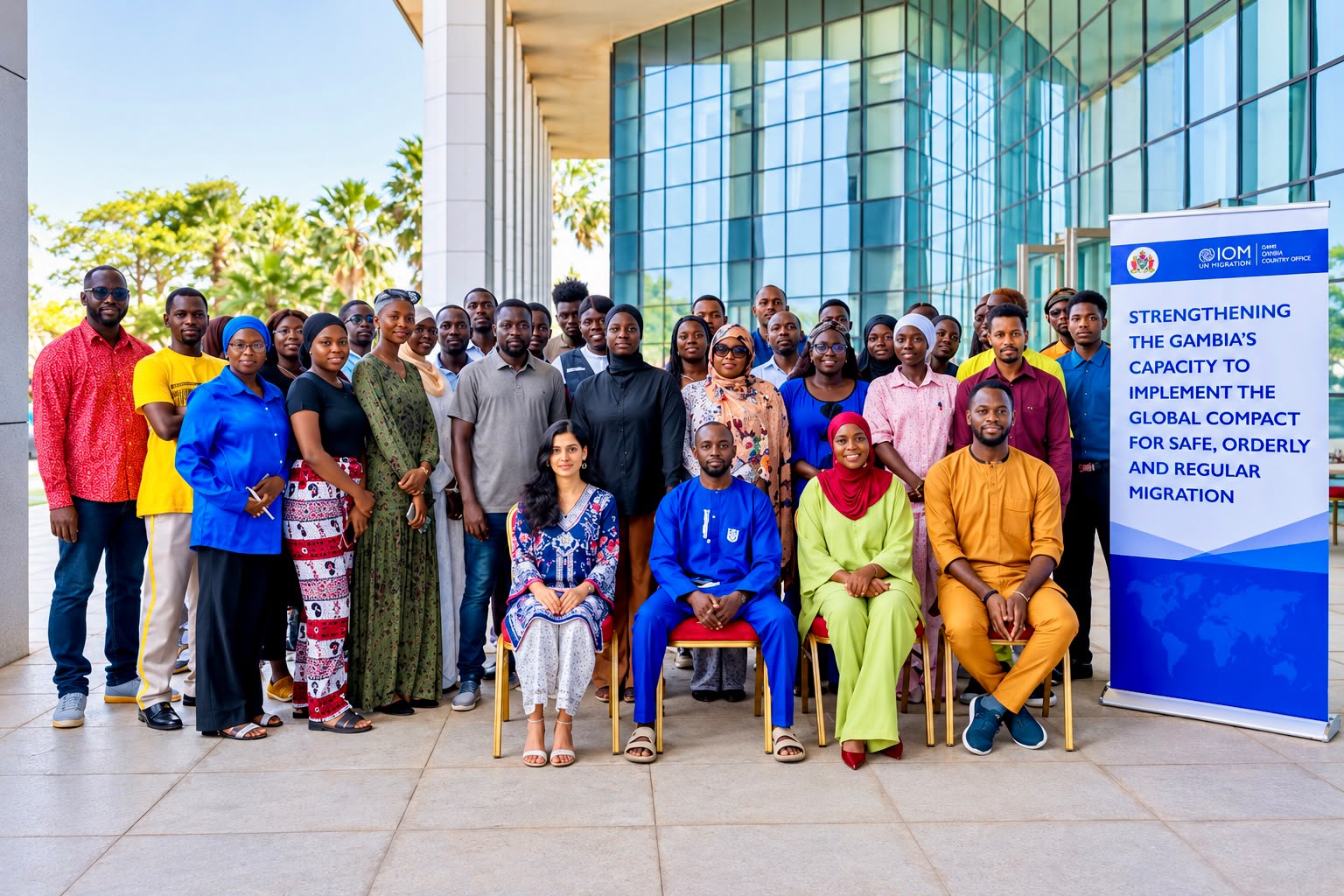
The International Organization for Migration (IOM) The Gambia opened a two-day training workshop on the Essentials of Migration Management on Tuesday to strengthen responsible migration communication and promote accurate, ethical, evidence-based reporting nationwide.
The workshop, themed “Strengthening Responsible Migration Communication: Promoting Accurate, Ethical and Evidence-Based Narratives,” is underway in Bijilo and brings together journalists, civil society representatives, and digital influencers. Organizers say the sessions aim to equip frontline communicators with practical skills to verify information, counter misinformation, and report on vulnerable migrants with sensitivity and respect for human dignity.
In her opening remarks, IOM Officer-in-Charge Ms. Sibgha Ajaz said the training was organized to deepen partnership between IOM, the government, and the media so that public information on migration remains accurate and humane. She warned that misinformation and sensational narratives can influence decisions, fuel stigma, and put lives at risk. “IOM remains committed to supporting The Gambia to promote safe, orderly and regular migration through responsible communication and capacity building for frontline communicators,” she said.
Gambia Press Union (GPU) President Ms. Isatou Keita challenged participants to examine their role in shaping public understanding. “Are we helping the public to understand migration, or are we merely reporting migration events?” she asked. Keita observed that coverage often focuses on departures, interceptions, and tragedies at sea, while labor mobility, remittances, family reunification, education, and development receive less attention. She cautioned against sensational headlines, unverified information, and reporting that speaks about migrants rather than to them.
“Words matter. The language we choose can either inform or inflame. It can humanize or stigmatize,” she said, urging adherence to the Gambia’s Charter of Ethics, particularly Part 6 on migration and minority groups. She added that the role of journalists “is not to promote migration, nor is it to discredit migration. Our role is to inform.”
Delivering the keynote address on behalf of Minister of Information, Media and Broadcasting Services Dr. Ismaila Ceesay, Deputy Permanent Secretary Mr. Madiba Sillah noted that almost every Gambian family has a migration story and that how migration is discussed therefore carries weight. “People migrate for many reasons. Some go to study, some to work, to join family, or to start a business. Others leave because life at home is hard. Most share the same hope, a better future,” he said.
He stressed the need for reliable information to counter the dangers of irregular migration, trafficking, and exploitation, warning that unverified stories spread quickly online and can shape the decisions of many young people. “Our task is to make sure people can get reliable information before they decide,” Sillah said. He affirmed the government’s commitment to safe, orderly, and regular migration and its intention to continue working with partners to strengthen migration management, protect migrants’ rights, and tackle human trafficking. He called on journalists, broadcasters, and influencers to verify information, protect the privacy and dignity of trafficking survivors, and tell the whole story of migration—not only its tragedies but also its complexities.
IOM described the initiative as part of its ongoing engagement with the Ministry of Information and the GPU to promote accurate public information on migration. Participants are expected to leave with stronger tools for ethical reporting that supports informed public discourse and safer migration outcomes.