By Fatou Dahaba
A newly formed National Coalition for Sustainable Fisheries in The Gambia has called on all presidential candidates to sign and commit to implementing a Charter for Sustainable Fisheries, arguing that the future of the country’s fish stocks, food security and coastal livelihoods depends on urgent action before and after the 5 December election.
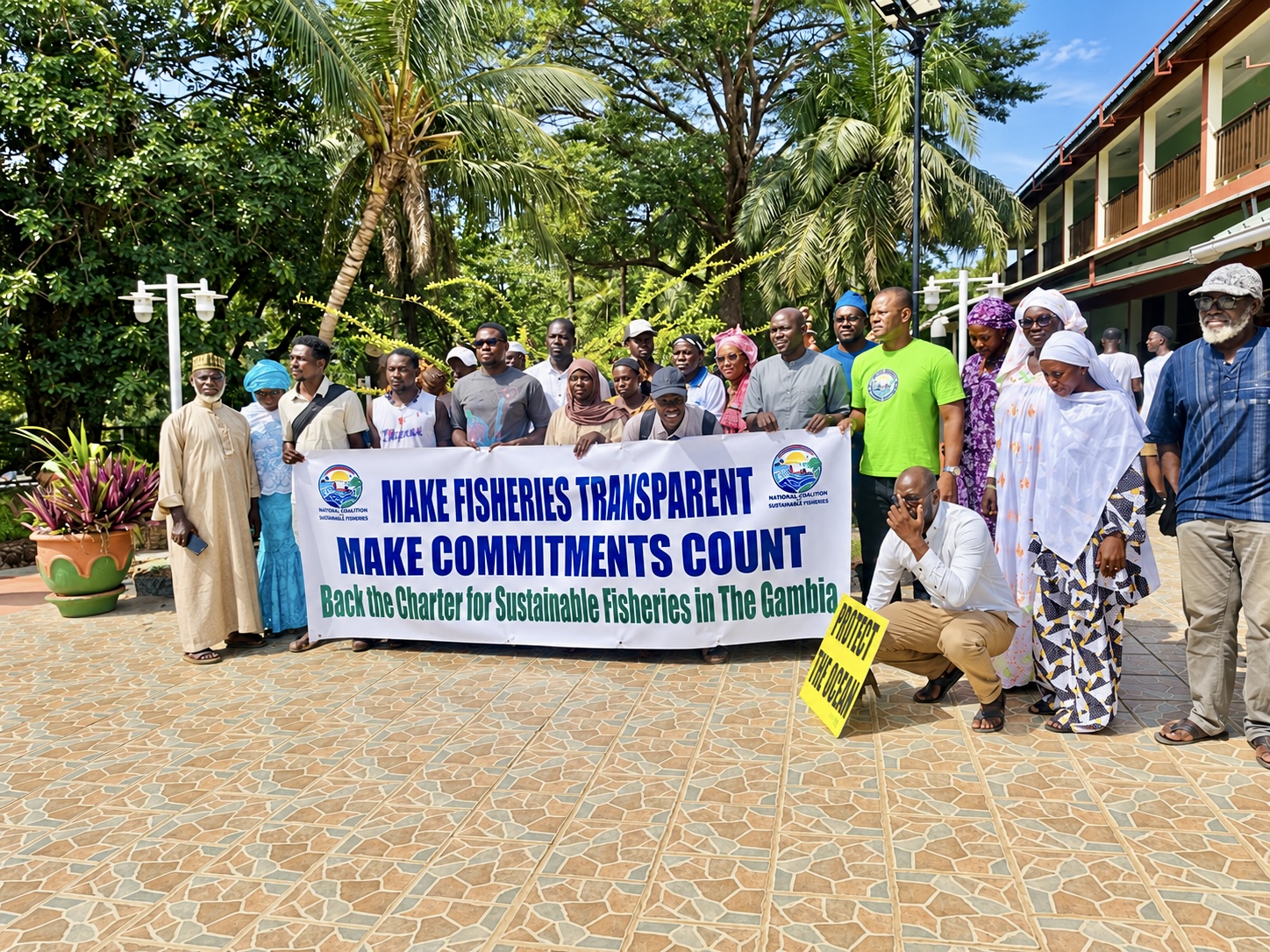
The coalition was launched on Saturday at the Senegambia Hotel during a meeting organized with Greenpeace Africa. The gathering brought together representatives of fishing communities, fisheries associations, women and youth groups, and civil society organizations, uniting stakeholders who rarely share a single platform in the lead-up to a national vote.
The Charter outlines 13 commitments to improve fisheries management by 2030. Its key proposals include a freeze on new industrial fishing licenses for already exploited stocks, stronger action against illegal, unreported and unregulated (IUU) fishing, tighter regulation of fishmeal and fish oil production, mandatory publication of authorized vessels and fishing agreements, and greater community participation in fisheries decision-making. Organizers say the document is grounded in existing Gambian fisheries laws and the principle of collaborative management.
Speaking at the press conference, Dawda Foday Saine, Secretary General of the African Confederation of Artisanal Fisheries Professional Organizations and coordinator of the coalition, said fisheries management required shared responsibility among government, communities and other stakeholders. He added that the sector must also be viewed through a regional and transboundary lens, because irresponsible fishing in one area threatens responsible fishing elsewhere.
Saine argued that the coalition’s call for restraint in industrial fishing stemmed from concerns that stocks are already under severe pressure. He described conservation measures such as closed seasons and protected areas as a necessary “biological rest period” to allow fish to regenerate and replenish. While signing the charter would represent a public commitment, he stressed that the coalition would still have to maintain pressure on whoever wins the election. The group plans to engage candidates directly, document their responses, and use media, public advocacy and international support to hold future leaders accountable.
Mamadou Kaly Ba, Ocean Campaigner at Greenpeace Africa, said the organization’s involvement was driven by its mission to protect the ocean and by the need to build a stronger network with Gambian civil society and fishing communities. According to Ba, the coalition intends to tackle illegal fishing, fishmeal and fish oil factories and other threats facing the marine environment. He described the election as an important chance to place fisheries issues before presidential candidates and demand clear commitments.
Ba emphasized that the charter was not only for fishermen and coastal communities, but for all Gambians, because protecting fisheries also protects jobs, nutrition and the wider economy. The coalition’s demands come against the backdrop of the sector’s major contribution to national accounts. According to provisional 2025 figures, fishing and aquaculture contributed D26.8 billion in value added, or 14.5 percent of GDP, while government policy estimates the sector supports 25,000 direct jobs.
Ahead of World Fisheries Day on 21 November, the coalition says it will circulate the charter, seek formal endorsements from candidates and continue building a united front to defend The Gambia’s marine resources. Organizers hope the public commitments extracted during the campaign period will translate into concrete policy once a new administration takes office.