By: Kebba Ansu Manneh
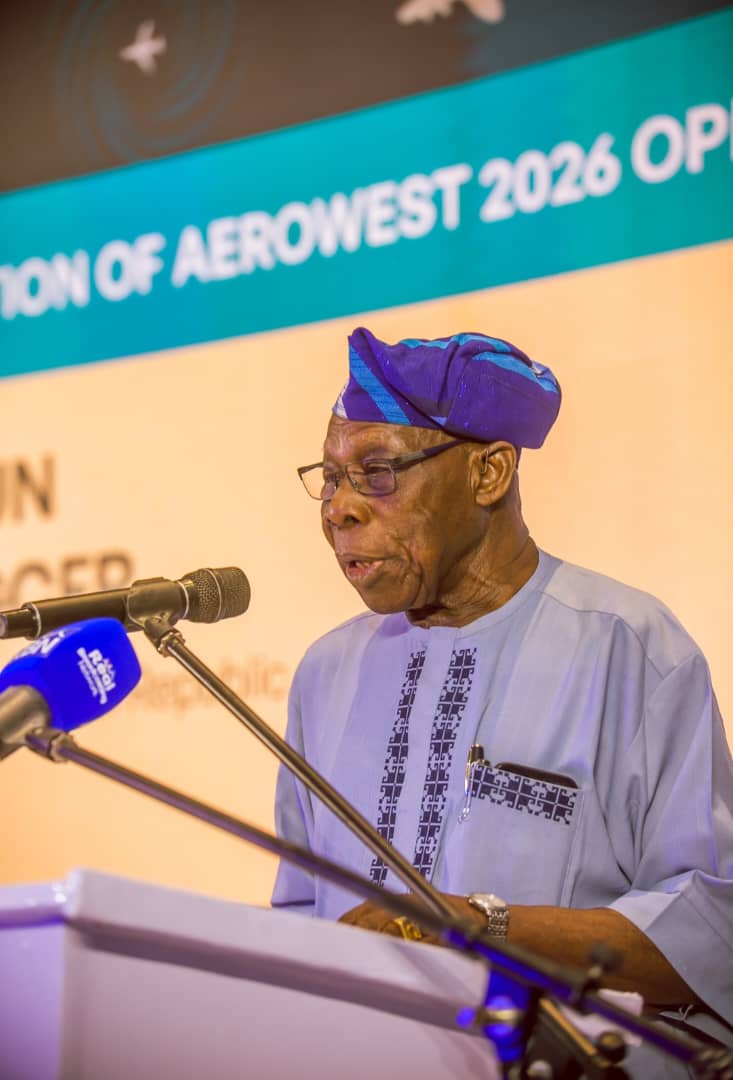
Former Nigerian President Olusegun Obasanjo has told delegates at the AeroWest Summit 2026 that the future of Africa’s aviation industry will not be decided by aircraft or airports alone, but by good governance, economic prosperity and a deeper understanding of the continent’s tourism wealth.
Speaking as special guest of honor at the Lagos gathering, held from 2 to 4 September under the theme “Financing Connectivity: Unlocking Aviation and Tourism Growth in West and Central Africa,” Obasanjo laid out a simple chain of cause and effect. Aviation, he said, cannot thrive without passengers. Passengers will not materialize without prosperity. Prosperity requires a thriving economy. And a thriving economy, he insisted, depends on good government.
“For aviation to fly, there must be passengers. For passengers to be available, there must be prosperity. For prosperity to exist, there must be a thriving economy. For a thriving economy to be there, there must be good governance,” he told the summit. Aircraft, he added, will not fly empty. Aviation grows only when it carries people, goods and commodities. Tourism, he argued, is the demand engine that can fill those seats — if Africa learns how to use what it already has.
Obasanjo said the continent does not lack attractions. Nigeria, Ghana, Benin and countries across Africa possess landscapes, cultures and heritage capable of driving development. The problem, he said, is that many Africans still do not recognize the value of those assets, and therefore cannot protect or commercialize them. “For tourism, we have it all. The issue is that we don’t know what we have. And when you don’t know what you have, I wonder how you will know how to make use of it,” he said. He went further: Africans must also know what has been lost or stolen. “If you don’t know what you have, how will you even be able to keep it?”
The former president said tourism could help halt the destruction of environments and heritage sites that already have real visitor appeal. He also urged governments to develop creative arts and image industries as part of a broader tourism strategy. Connectivity, he argued, is not the missing piece in the abstract. What is missing is the will to bring aviation and tourism to life together. “What we lack is not connectivity. What we lack is how to bring that connectivity to life. Connectivity is developed. We must build the connection between the aviation and the tourism industry together.”
Obasanjo said AeroWest 2026 could open pathways for stronger links across West and Central Africa, but only if governments, the private sector, civil society and local communities work in concert. Communities, he noted, have a direct stake in whether tourism is sustainable. Some remain unwelcoming to visitors because they have never been shown what tourism can mean for jobs and local income. African governments, he said, must therefore invest in training and skills so that people know how to receive, welcome and keep visitors coming back.
The three-day summit in Lagos brought together aviation, tourism, finance and investment leaders to confront a familiar contradiction: a region rich in destinations but still poorly connected.