By Sainabou Sambou
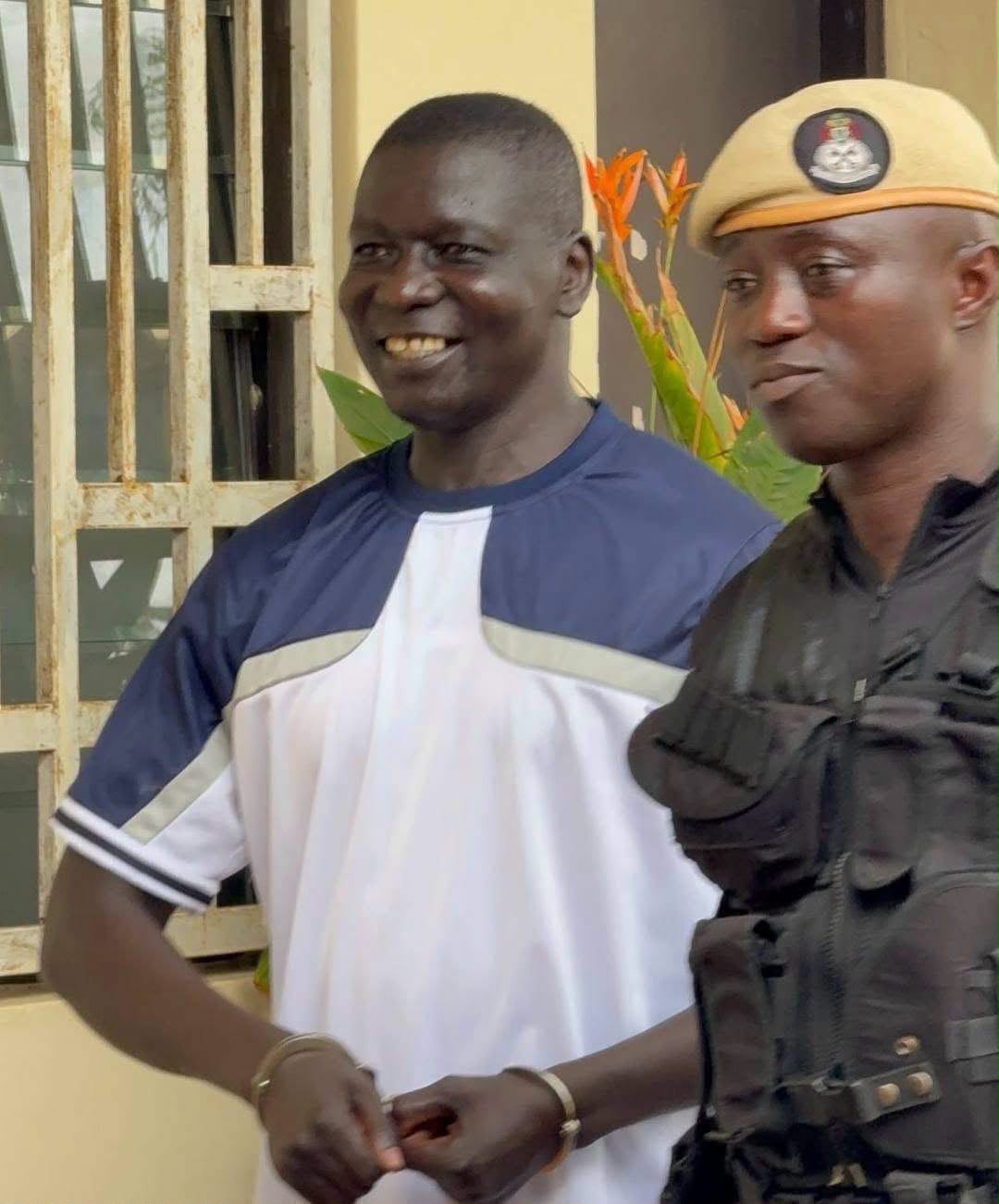
Former Gambia Armed Forces officer Sanna Manjang opened his defense today before Justice S.K. Jobarteh of the High Court in Banjul, delivering a detailed account of his military service, years of border operations along the volatile Gambia-Casamance frontier, and a dramatic rescue of seven Gambian civilians he said were seized by Casamance rebels.
The hearing marked the formal start of the defense case after the State dropped murder charges against Manjang and proceeded only with two counts of assault. The court had earlier permitted the amendment of the charges. With the prosecution having closed its case, the defense began calling witnesses.
Before Manjang entered the witness box, defense counsel S.K. Jobe informed the court that the defense was abandoning its bail application filed on 22 July 2026. Jobe explained that the State’s affidavit in opposition was served after 3:00 p.m., leaving insufficient time to prepare and file a reply before the court vacation—Deputy Director of Public Prosecutions E.R. Dougura, appearing with A. Gibba for the State, did not object. The court accordingly recorded the abandonment of the application.
Although the bail bid was withdrawn, the State’s affidavit in opposition had already been filed. Sworn by Fatou Waggeh, a legal clerk at the Attorney General’s Chambers and Ministry of Justice, the document argued that Manjang posed a significant flight risk. It relied on information from Dougura that Manjang deserted the Gambia Armed Forces around 2017. His name appeared on an official list of deserted personnel published by the military, and the Armed Forces’ Absent Without Official Leave (AWOL) Register of Officers and Senior Non-Commissioned Officers recorded that he absented himself from his unit on 23 January 2017 and remained listed as absent.
The affidavit stated that after Manjang could not be located, the State obtained a warrant of arrest from the Magistrates’ Court on 7 February 2025. Prosecutors said he remained outside The Gambia for approximately nine years before being apprehended and returned through a joint Gambian-Senegalese law-enforcement operation. They contended he did not voluntarily submit himself to the court’s jurisdiction. His alleged desertion, prolonged absence and the circumstances of his return, the State argued, demonstrated a substantial risk that he would abscond if granted bail.
The affidavit further noted that Manjang rose to the rank of Lieutenant Colonel and alleged he was a prominent member of former President Yahya Jammeh’s alleged hit squad, known as the “Junglers” or “Black Blacks.” It claimed his military training, experience and former security connections heightened the risk that he could evade justice or breach bail conditions.
Reference was also made to the findings of the Truth, Reconciliation and Reparations Commission (TRRC), which adversely mentioned Manjang in connection with alleged human rights violations under the former regime. The Government White Paper accepted recommendations that led to the creation of the Office of the Special Prosecutor, and the State suggested Manjang could face further charges arising from those recommendations. Given the public interest in the case and his antecedents, the prosecution maintained that bail would not serve the interests of justice.
Taking the stand, Manjang introduced himself as a native of Brikama, a married man with one wife and eight children. He said he currently works as a Parliamentary Officer and previously served in the Gambia National Army, rising to Lieutenant Colonel.
He enlisted in January 1994, completed six months of basic training and was posted to Fajara Barracks as an infantry soldier. His early duties included maintaining discipline among troops. After about two years he was promoted to Lance Corporal and later to Corporal. Selected for the Joint Gambia-Libya Commando Training Programme on the strength of his performance, he underwent a rigorous three-month course at the Yundum Police Training School conducted by Libyan and Arab instructors. Of the 31 to 32 soldiers who participated, Manjang said he graduated among the top performers and was retained as a Commando Instructor, training other Gambian soldiers until military cooperation with Libya ended.
He was subsequently posted to State House and later ordered to report to Kanilai. Postings, he explained, were announced through official notices displayed on notice boards; individual service files primarily recorded courses attended, while the Army clerk’s office maintained official posting records. On arrival in Kanilai he reported to Commander Kalipha Bajinka, who appointed him Patrol Commander. “I was shown the patrol vehicle and immediately assumed my duties,” Manjang told the court. He was the only Patrol Commander stationed there at the time.
Manjang described the Gambia-Casamance border as one of the country’s most unstable areas during his deployment. Frequent clashes between Senegalese forces and Casamance rebels threatened Gambian communities living nearby. “My responsibility was to ensure that Gambians could go about their normal daily activities without fear,” he testified. Companies of 90 to 100 soldiers were rotated from Banjul to Kanilai each month for border duties. While he supervised patrols, he did not personally select the soldiers; he requested the senior officer accompanying each company to nominate suitable personnel.
He remained on continuous border patrol until 22 January 2017 and claimed unmatched familiarity with the terrain: “There was no one in the Gambia National Army who knew that border better than me.” During this period he was promoted from Sergeant to Staff Sergeant, then commissioned and rose successively to Lieutenant, Captain, Major and finally Lieutenant Colonel.
The most vivid portion of his testimony concerned a rescue operation involving seven Gambian men allegedly captured by Casamance rebels while still on Gambian soil. After receiving the report, Manjang said he proceeded to the scene, where police officers briefed him and indicated the route the rebels had taken into Casamance. He ordered his men into defensive positions and set off in pursuit. “As I got closer, they opened fire on me,” he recounted. He initially withheld return fire despite several rounds directed at him, then responded tactically as he advanced. The exchange lasted approximately 45 minutes before the rebels retreated, allowing him to reach the hostages. “When I got to them, I confirmed that all seven men were present,” he said. None had been struck by gunfire, though one had sustained minor injuries. The seven men, together with their donkey carts and bicycles, were escorted to the police station, where statements were recorded.
Manjang told the court that his operational area stretched from Kampansa to Dansilami, encompassing several border communities.
The matter was adjourned to 16 October 2026 at 9:30 a.m. for continuation of the defense case.