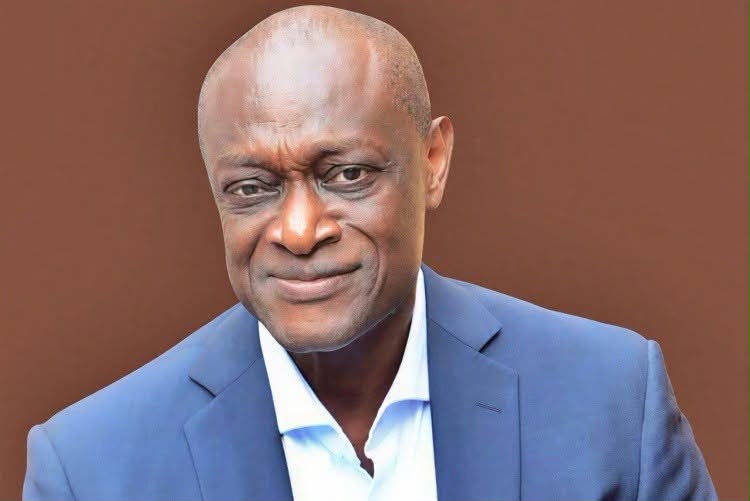
Prominent Gambian-born United States-based attorney Edi M.O. Faal, popularly known as Pa Edi Faal, has been confirmed as the next Chief Justice of The Gambia and will be sworn into office on Friday. He replaces outgoing Chief Justice Hassan B. Jallow, who is retiring after reaching the constitutional age limit following nearly a decade at the helm of the judiciary.
Faal, a seasoned practitioner based in the United States, brings over four decades of legal experience spanning multiple common-law jurisdictions. Admitted to the California Bar and the Supreme Court of the United States in 1982, he is also a member of the Bar of England and Wales and was called to the Gambian Bar in 1993. His academic credentials include a Juris Doctor from Western State University, an LLM in International Dispute Resolution from University College London, and a Bachelor of Science from Florida International University. He is a Fellow of the Chartered Institute of Arbitrators.
Throughout his career, Faal has specialized in complex business litigation, criminal defense, arbitration and mediation. He rose to international prominence in the early 1990s as defense counsel in the high-profile Reginald Denny trial arising from the Los Angeles riots. He later represented The Gambia in investor-state disputes before the International Center for Settlement of Investment Disputes. In 1998, the Judicial Service Commission recognized him as one of the country’s eminent practitioners and invited him to join the newly created Supreme Court.
The appointment has drawn a range of responses. The Gambia Bar Association earlier expressed formal constitutional reservations, arguing after an emergency meeting that Faal did not fully satisfy the eligibility criteria under Section 139 of the Constitution. The association emphasized that its position concerned legal requirements rather than Faal’s personal integrity or professional achievements, and it relayed its views to President Adama Barrow and relevant institutions.
Supporters, including legal commentators in the diaspora and at home, have welcomed the choice, citing Faal’s extensive courtroom experience across continents and his potential to inject fresh international perspectives into The Gambia’s judicial system. They argue that his multi-jurisdictional practice aligns with the country’s reform trajectory since the democratic transition.
As Friday’s swearing-in approaches, attention turns to how Faal will navigate the transition and address ongoing efforts to strengthen judicial independence, efficiency and public confidence. His elevation marks a notable shift for the highest court at a time when the judiciary continues to consolidate gains made under Jallow’s leadership.