By Fatou Dahaba
The National Assembly on Wednesday received the report of the Finance and Public Accounts Committee (FPAC) following its detailed scrutiny of the Auditor General’s Report on the Government of The Gambia Accounts for the year ended 31 December 2025. The committee’s findings, which also covered the Petroleum Commission and the Medicines Control Agency, painted a concerning picture of persistent weaknesses in financial management, incomplete documentation and governance shortfalls across key public institutions.
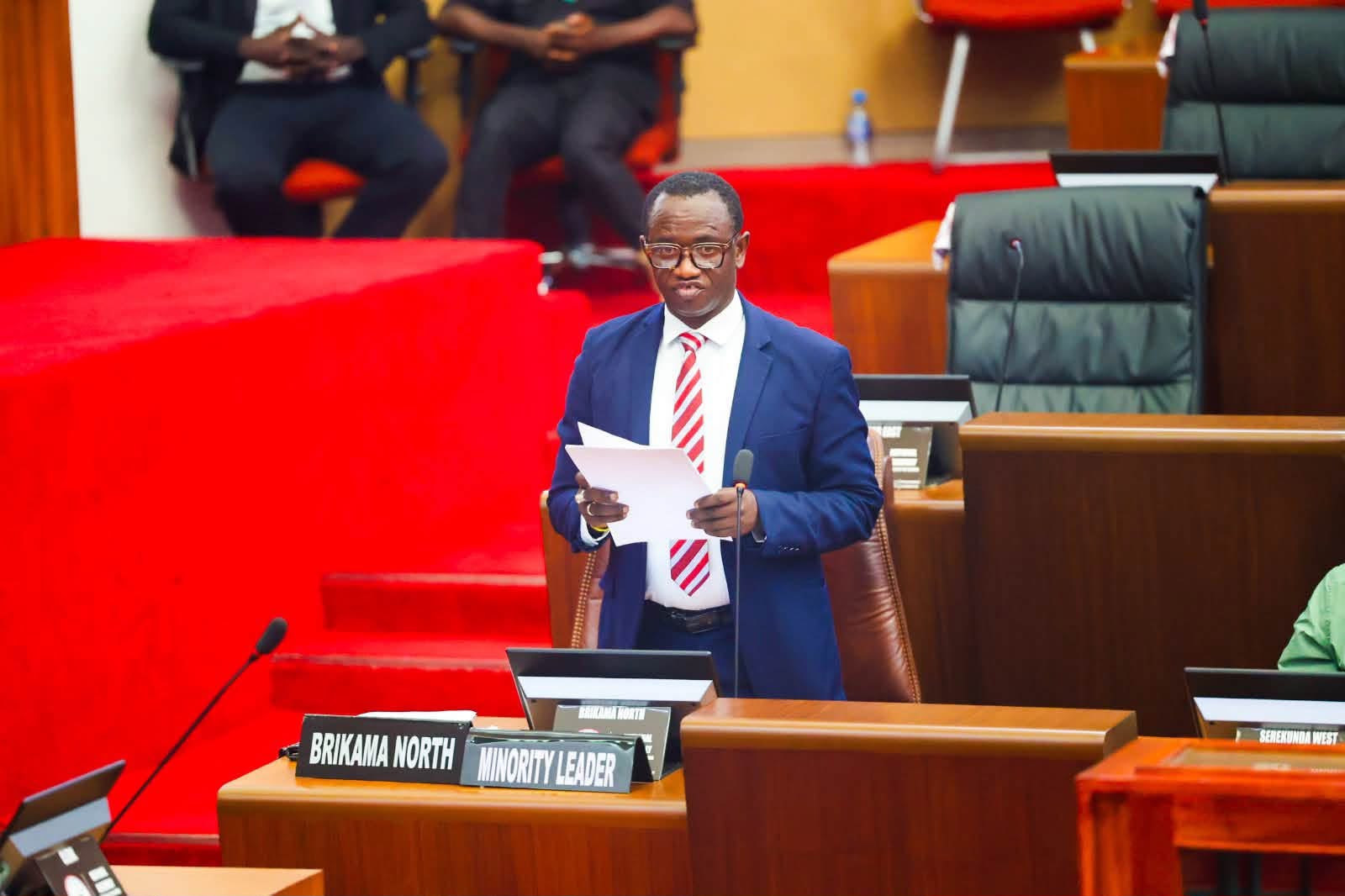
Presenting the report, FPAC Chairperson Hon. Alagie S. Darboe, Minority Leader and Member for Brikama North, outlined a series of irregularities that auditors and the committee say undermine transparency and accountability in the use of public funds. Central among the issues were missing audit records, unreconciled accounts, incorrect receivables postings, and unexplained differences between cash book and general ledger balances.
The committee further noted delays in remitting revenue within stipulated periods, uncleared transit accounts, unreconciled bank items stretching back several years, and unsupported transfers from closed bank accounts.
The committee drew particular attention to the use of contingency funds. The report revealed that these resources, intended strictly for urgent and unforeseen expenditure, had been applied to routine and predictable costs such as travel, training and supplies. Hon. Darboe warned that such practices defeat the purpose of the contingency fund and called on the Ministry of Finance and Economic Affairs to immediately restrict its use to genuine emergencies while providing full explanations for past charges.
Beyond the central government accounts, the committee identified sector-specific governance and control failures. These included the Losses Advisory Committee’s failure to convene as required, non-compliance with fisheries regulations, unpaid revenue from fish processing and fishmeal factories, and weaknesses in public investment management. The report also highlighted incomplete disclosure and confirmation of government investments, along with missing supporting information for substantial subscribed capital amounts.
In its review of the Petroleum Commission, the committee raised concerns about provisions on official vehicle ownership, missing bank statements linked to sector accounts, and shortcomings in asset management. It recommended tighter internal controls, improved disclosure practices, and full compliance with statutory and financial requirements. At the Medicines Control Agency, issues included non-compliance with withholding tax obligations and the failure to furnish the acute kidney injury investigation report requested by the auditors.
Addressing the Assembly, Hon. Darboe stressed that sound public financial management depends not only on clear rules but on consistent implementation, proper documentation, close supervision and firm enforcement. He insisted that the National Assembly’s recommendations must translate into measurable corrective action by the institutions concerned.
While acknowledging the cooperation of the Auditor General, the Accountant General, permanent secretaries, board chairpersons, heads of public institutions and technical staff who participated in the scrutiny, the committee maintained that responsible agencies must now treat the recommendations as formal accountability obligations. Institutions are expected to report back to the Assembly within the timelines it has set.
Among its general recommendations, the committee called for a time-bound program to clear outstanding reconciliations, stronger controls over financial reporting and self-raised revenue, stricter adherence to the Public Finance Act and tax rules, improved loan monitoring for state-owned enterprises, and structured tracking of the implementation of FPAC recommendations. The report now stands as a formal record of the Assembly’s demand for greater fiscal discipline and transparency in managing public resources.