By Fatou Dahaba
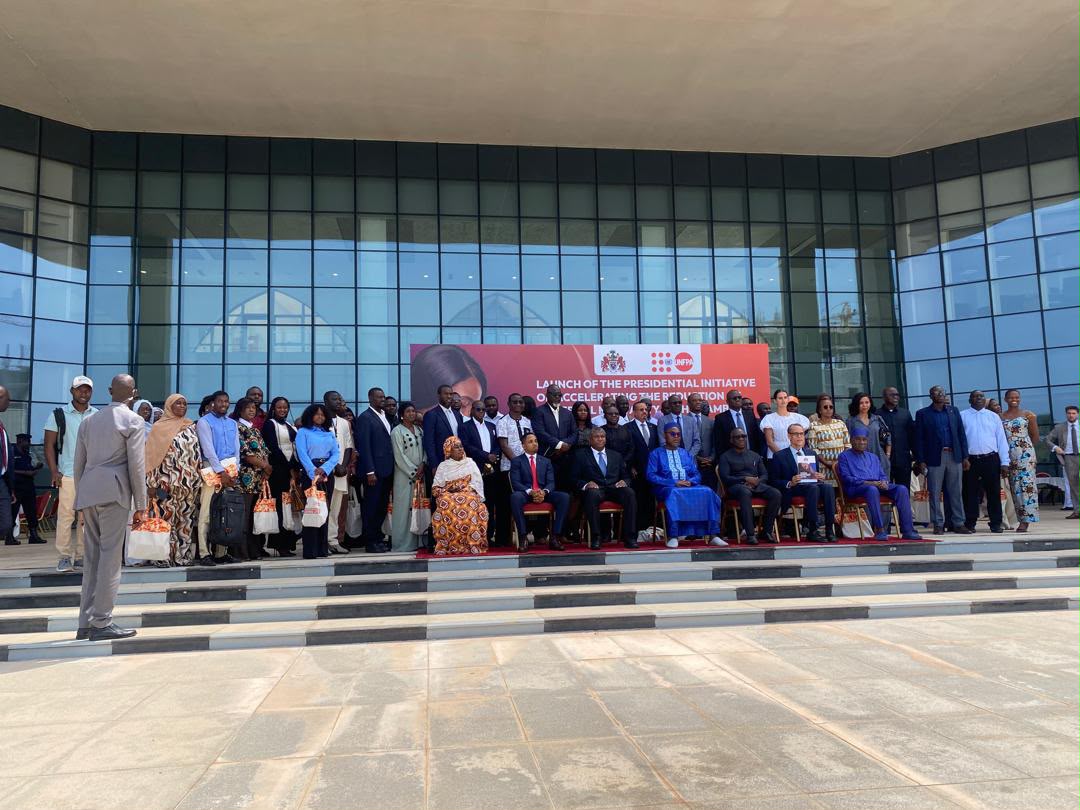
The Government of The Gambia on Tuesday launched a national roadmap to accelerate the reduction of maternal mortality, marking a significant step in efforts to improve the survival of mothers and newborns. The event took place at the Sir Dawda Kairaba Jawara International Conference Center and signals stronger political commitment to one of the country’s most pressing public health challenges.
Officials said the initiative takes a multisectoral approach. It addresses gaps in the health sector while also tackling wider social and economic factors that contribute to maternal deaths, including poverty, weak infrastructure, harmful practices, gender inequality and limited access to quality care. Speakers described the launch as a turning point, with the government pledging to strengthen coordination, accountability and investment in maternal, newborn and neonatal health. The roadmap aligns with national development priorities and international commitments to protect the health and dignity of women and children.
Speaking on behalf of President Adama Barrow, Vice President Muhammed B.S. Jallow said the launch represents more than the unveiling of a policy document. “It is not just the unveiling of a strategic document,” he said. “It is a declaration of moral resolve. It is the Gambian people speaking with one voice that no woman shall lose her life whilst giving birth, and that we shall not rest until every child born in this country is safe, dignified and affirmed.”
The Vice President said the initiative enshrines the government’s “most solemn commitment to the women and girls of this nation.” He stressed that maternal mortality is not only a health issue but also a matter of human rights, equity and good governance. Although The Gambia has made progress, the figures remain concerning. Maternal mortality fell from 433 to 289 deaths per 100,000 live births between 2013 and 2020. “Each figure represents a preventable death, a grieving family and an indictment of our collective responsibility,” he said. “Today, we choose differently.”
Vice President Jallow explained that the roadmap takes a whole-of-government, whole-of-society approach. It brings together sectors including health, finance, education, agriculture, gender, youth and disaster management. A woman’s survival during childbirth, he noted, depends on more than hospital care. “It depends upon her access to education, her nutritional status, her protection from violence and harmful practices, her bodily autonomy and her economic empowerment,” he said.
UNFPA Regional Director for West and Central Africa Dr Sennen Hounton said The Gambia is sending “a powerful message” by placing maternal survival at the center of national policy and leadership. “No woman goes into labour hoping to die,” he said. “She is lost for want of the people and for want of a good system.” He added that most maternal deaths are preventable and called for continued political will, accountability and financing to turn the roadmap into real improvements for women and families.
United Nations Resident Coordinator Karl Frederick Paul described the launch as “a pivotal moment in our collective history.” He said maternal mortality should be treated as both a development and public health issue. “When a mother dies or suffers severe morbidity during childbirth, the ripple effect tears through families, halts productivity and undermines the health and education of surviving children,” he said. Paul confirmed that the United Nations system in The Gambia remains committed to supporting the government through a coordinated approach involving UNFPA, WHO, UNICEF, WFP and other partners.
The roadmap is expected to guide stronger action on emergency obstetric care, midwifery services, adolescent pregnancy prevention, harmful practices and domestic health financing. Its ultimate goal is to ensure safer childbirth across The Gambia.