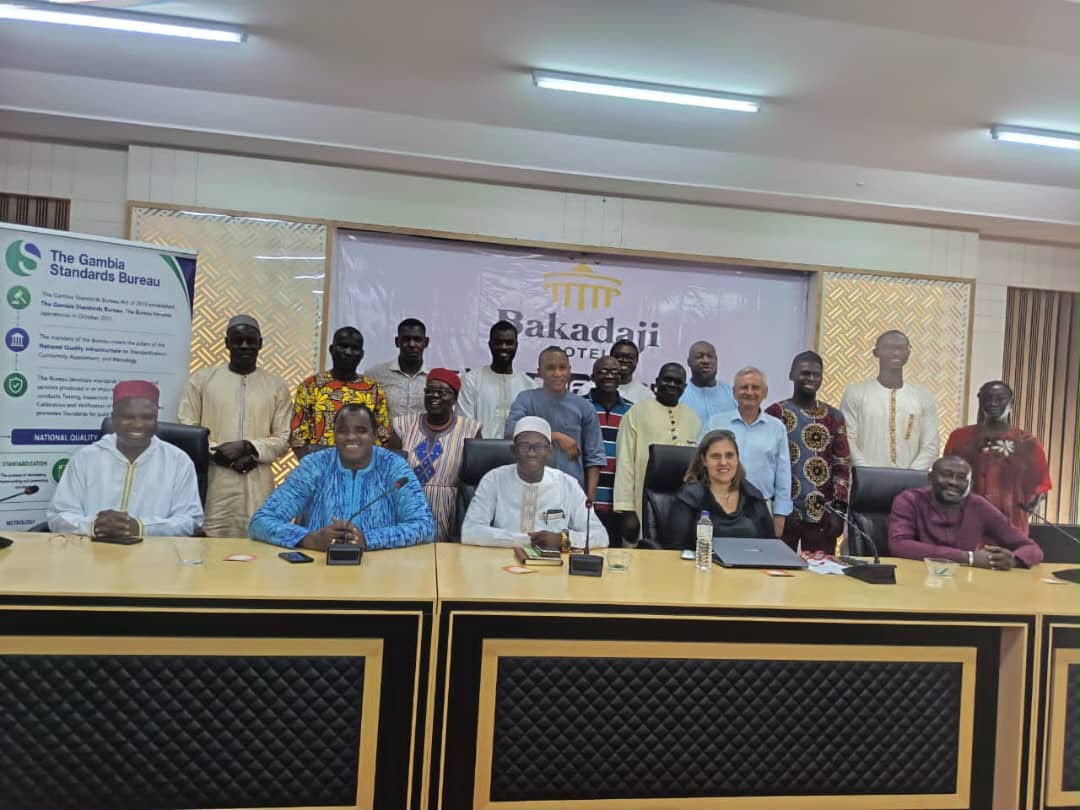
The Gambia Standards Bureau (TGSB) on Friday validated draft national standards for organic fertilizers a strengthen quality controls for waste-to-fertilizer processes and improve the livelihoods of smallholder farmers nationwide.
The validation meeting is part of TGSB’s ongoing partnership with Mboolo Association, CISS, and WasteAid under an agreement to develop national standards for organic fertilizers and support scaling up production. The European Union-funded Civil Society Green Advocacy for Organic Fertilizers program supports the initiative and seeks to promote the conversion of organic waste into quality-assured organic fertilizers.
Silvia Llopart Gràcia, a member of the technical committee, underscored the standards’ importance in improving the livelihoods of smallholder farmers. She thanked the donors for their unwavering commitment and dedication to developing the standards and supporting their successful implementation.
Deputy Director of the Gambia Standards Bureau, Nassiru Janneh, described the development and application of organic fertilizers as central to advancing sustainable agriculture, improving soil health, and ensuring food security. However, he stressed that these goals cannot be attained without clear, validated standards.
“Without standards, the quality, safety, and effectiveness of these products will remain inconsistent, posing risks to farmers, consumers, and the larger environment,” Janneh said. He explained that the validation meeting marks a critical step in establishing harmonized benchmarks that will guide production, certification, and market acceptance.
According to Janneh, the session also represents an important step toward meeting targets outlined in the government’s overall development blueprint. He reaffirmed the Bureau’s commitment to developing standards aligned with national priorities.
“By validating these standards, we aim to promote transparency, safeguard public health and the environment, strengthen consumer confidence, and encourage innovation within the organic fertilizer sector,” he stated. He urged participants to contribute their expertise so that the standards adopted are scientifically sound, practically applicable, and consistent with international best practices.
Janneh also commended the technical committee members and other contributors for their work in developing the draft standards. The validation exercise is expected to pave the way for more consistent, safe, and effective organic fertilizers, supporting both environmental sustainability and improved agricultural productivity for Gambian farmers.