By Momodou Gagigo
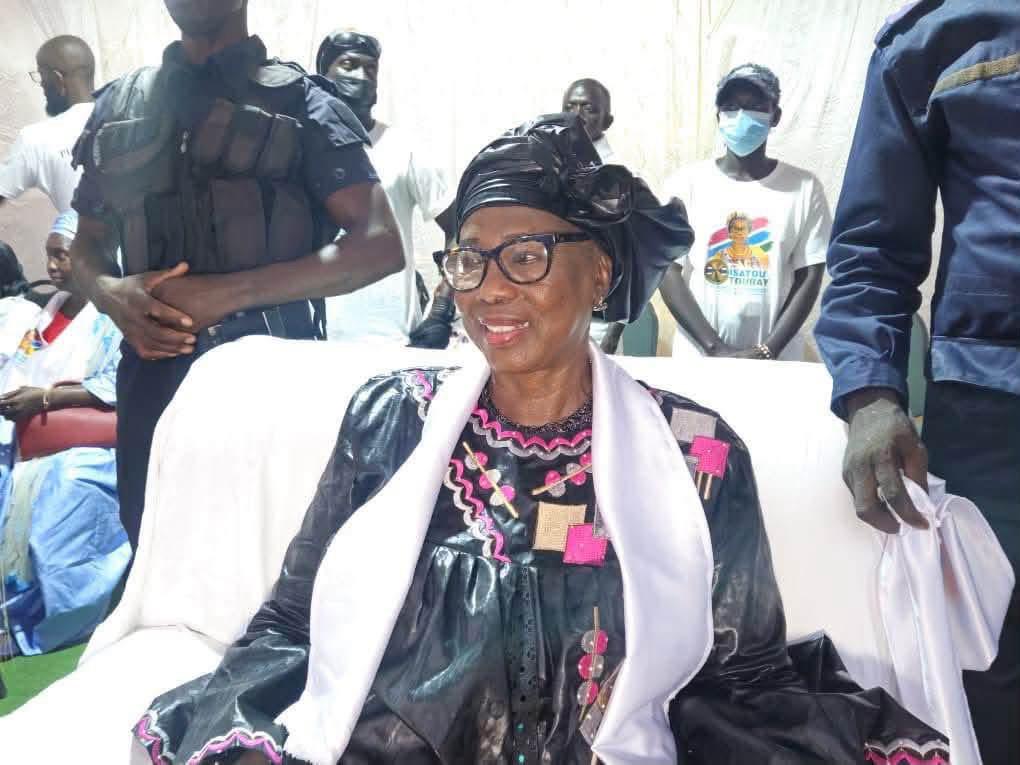
A few hundred supporters converged on a major rally in Brikama SSP, where presidential hopeful Dr. Isatou Touray laid out a comprehensive vision for The Gambia’s future, promising sweeping constitutional reforms, economic revival, and greater inclusion for youth and women.
Party officials used the occasion to sharply criticize the current administration’s shortcomings, painting a picture of widespread discontent among ordinary citizens.
The event, organized by Dr. Touray’s political movement, was described by organizers as a pivotal gathering at a time when the nation grapples with economic pressures, youth migration, and questions of governance.
Party Chairperson Dawda Ceesay opened the proceedings by framing the rally as a “critical turning point” for the party and the country.
“We are at a critical turning point for our party where we yearn for peace and the continued progress of our movement,” Ceesay told the enthusiastic crowd.
He lambasted the government for failing to address the everyday struggles of Gambians, pointing specifically to delays in payments to farmers for last season’s produce. Many rural families, he said, continue to wait for compensation that could sustain their livelihoods.
Ceesay also highlighted the heartbreaking trend of young Gambians embarking on the perilous “backway” migration routes across the Sahara and Mediterranean Sea in search of better opportunities.
“Education, youth employment, and national development must remain at the heart of our priorities,” he stressed, while appealing to Gambians living abroad to sustain their contributions to the homeland.
Representing the diaspora, Babucarr Ceesay echoed these concerns, drawing attention to the tragic loss of young lives during irregular migration attempts. He positioned the diaspora as vital partners in national development and called for concrete mechanisms to amplify their voices. “We, the diaspora, ask for the right to vote and to contribute meaningfully to addressing the challenges facing Gambian youths,” he declared, drawing applause from the audience.
Other speakers reinforced Dr. Touray’s proven leadership. Paboy Fraiser credited her tenure as Vice President with playing a key behind-the-scenes role in securing major road infrastructure projects under President Adama Barrow’s administration.
Fatou Cham, a resident of Brikama Kembujeh, urged women nationwide to mobilize behind Touray, describing her as a champion of inclusive growth. “Her leadership will empower women and promote genuine development,” Cham said, praising Touray’s record of dedication during her time in high office.
In a particularly passionate address, Sarjor Njie, the Alkalo of Danka Danka Village in the North Bank Region, reaffirmed his steadfast loyalty to the party. Njie, who has witnessed multiple political eras, declared he would attend the rally “under any circumstance,” even joking, “even if I lose my wife, I will endeavor to attend the rally.” He recalled his early predictions about the end of former President Yahya Jammeh’s long rule, positioning the current movement as a continuation of the push for genuine democratic progress.
The centerpiece of the rally was Dr. Isatou Touray’s keynote speech, in which she unveiled an ambitious reform agenda designed to restore public trust and accelerate development. Her priorities include comprehensive constitutional reforms to strengthen democratic institutions, restoring confidence in governance through enhanced accountability and transparency, and delivering high-quality, modern education accessible to all Gambians.
Touray pledged to tackle the rising cost of living, stimulate broad-based economic growth, expand digitalization across sectors, and launch a national energy program to boost productive capacity. She also committed to transforming agriculture and rural economies through increased investment, the overhaul of healthcare services, the implementation of security sector reforms, and the greater participation of the diaspora in governance and development initiatives.
Supporters at the rally expressed growing optimism that these policies could address pressing economic hardships, reduce youth unemployment, and create new opportunities for women and rural communities. Many described the gathering as a turning point that could reshape the political landscape ahead of future elections.