By Sainabou Sambou
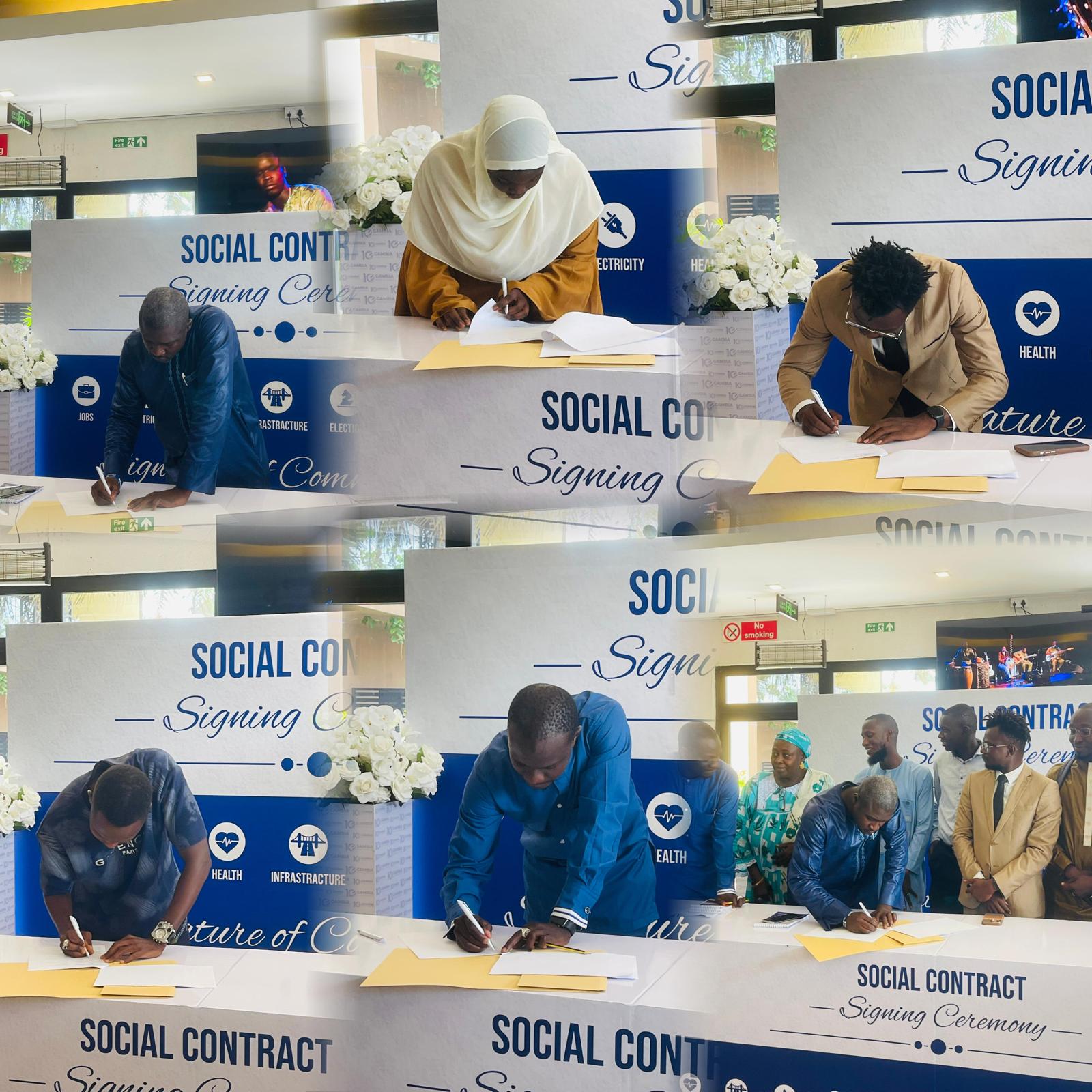
In a significant move to bridge the gap between young Gambians and their political leaders, Gambia Participates hosted a high-level Social Contract Signing Ceremony on Saturday, uniting National Assembly Members, aspiring candidates, youth representatives, civil society organizations, and media stakeholders.
The event, organized under the organization’s WID Project with support from Democracy Reporting International (DRI) and partners, introduced a Youth-Politician Social Contract designed to foster trust, transparency, and mutual accountability in The Gambia’s governance.
Program Officer Ansuman Ceesay emphasized that the initiative aims to create a new culture of engagement between politicians and youth, moving beyond election-day promises to sustained collaboration.
“Young people constitute the majority of the country’s population and are central to its development aspirations, yet they continue to face challenges including unemployment, limited economic opportunities, unreliable electricity supply, inadequate access to quality education and healthcare, corruption, and limited participation in governance,” Ceesay said.
“These concerns are not simply youth issues; they are national development issues. They require leadership, commitment, and collaboration.”
The Social Contract recognizes that democracy should extend far beyond polling stations, providing continuous platforms for citizens to influence decisions and hold leaders accountable. While not legally binding, the document serves as a public accountability tool that citizens and youth can use to monitor political commitments.
Its preamble highlights persistent youth challenges, including poor road infrastructure, limited access to water and sanitation, concerns about corruption, and barriers to meaningful participation in decision-making. It affirms that elected leaders and aspiring politicians have a duty to serve the public interest, while young people must actively engage in democratic processes through peaceful and constructive means.
Under the contract’s key provisions, National Assembly Members and aspiring candidates commit to prioritizing reliable electricity, improved healthcare and essential medicines, quality education, better infrastructure, job creation for youth, and investment in sports. They also pledge to fight corruption, promote transparency in public resource management, reject political violence, vote-buying, and hate speech, and conduct issue-based campaigns.
Signatories further agreed to hold at least one structured annual consultation with youth groups, maintain open communication channels, advocate for greater youth and women’s representation, and support reserved seats for young people and women in the National Assembly. They will publicly report on progress made.
In return, young people commit to active participation in elections, monitoring implementation of the contract, rejecting violence and hate speech, verifying information before sharing it, and engaging leaders through respectful dialogue.
A multi-stakeholder monitoring mechanism has been established, including representatives from youth organizations, civil society, media, student associations, and politicians. This team will track progress, facilitate dialogue, and organize annual public accountability forums.
Ceesay described the signing as more than symbolic.
“It represents a public pledge by political leaders to place citizens’ interests above partisan ones and work towards addressing issues affecting young people and communities,” he said.
The Social Contract takes effect immediately upon signing and remains active throughout the tenure of elected officials and across electoral cycles. Stakeholders expressed optimism that the framework will enhance youth involvement in governance, strengthen democratic reforms, and contribute to more responsive leadership in The Gambia.