By Sainabou Sambou
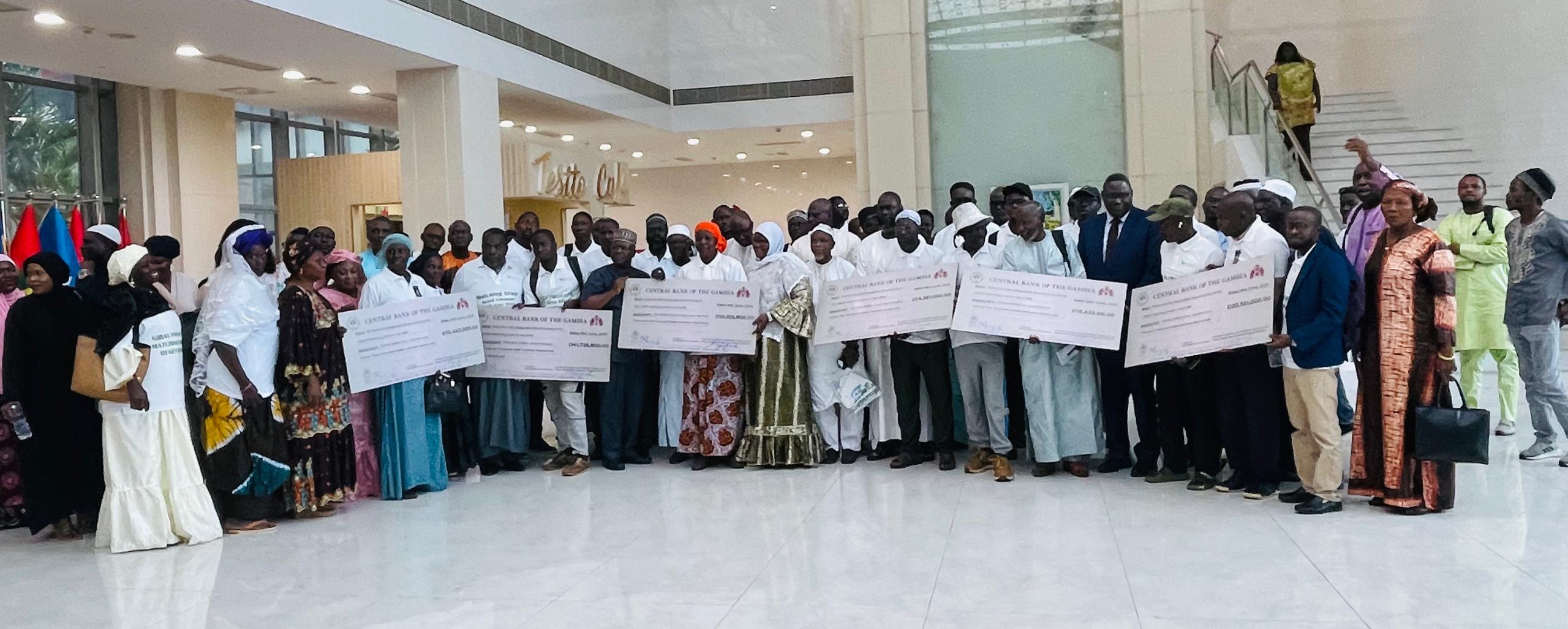
The World Bank has commended the Gambia Inclusive and Resilient Agricultural Value Chain Development Project (GIRAV) for its remarkable strides in bolstering food security and empowering agribusinesses nationwide, as 214 beneficiaries received matching grants at a high-profile ceremony on Friday.
Speaking at the event held at the Sir Dawda Kairaba Jawara International Conference Center in Bijilo, World Bank Group Resident Representative Franklin Mutahakana highlighted the project’s transformative impact since its inception. The World Bank Board approved an initial US$40 million grant in November 2021, followed by an additional US$68 million in April 2024, bringing the total financing to US$108 million.
Mutahakana noted that GIRAV has already supported more than 53,000 farmers in adopting climate-smart technologies and has improved food security for over 426,000 people through the distribution of improved seeds and fertilizers. “The project is delivering tangible results on the ground,” he said.
Recent milestones include the launch of the 2026 seed program by Agriculture Minister Demba Sabally, which procured and is distributing 250 tonnes of improved seeds via a digital platform. The initiative has also established 40 modern five-hectare irrigated farms led by women and youth, and is nearing completion of two agro-logistics centers in Wassu and Farafenni. Five digital platforms have been introduced to enhance seed distribution, extension services, trade, and monitoring systems.
Additionally, 4,000 smart water meters were delivered to the National Water and Electricity Corporation (NAWEC), alongside ongoing land reforms to secure land tenure and digitize administrative processes.
Infrastructure development remains a priority, with over 200 kilometers of feeder roads under construction to improve market access and rural connectivity. Under the GIRAV Matching Grant Scheme, 403 agribusinesses have so far received US$11.1 million in funding, leveraging an additional US$4.2 million in private investment. These funds are enabling expanded production, value addition, job creation, and the strengthening of key value chains.
“Access to finance is one of the key drivers of agricultural transformation,” Mutahakana emphasized. He described the matching grant facility as crucial in bridging financing gaps, especially for women and youth-led enterprises, and urged beneficiaries to use the funds responsibly to build stronger relationships with financial institutions.
Agriculture Minister Demba Sabally provided a detailed breakdown of the grants awarded over the past three years: more than US$3.9 million to 19 small and medium enterprises, US$1.2 million to 74 groups, and US$2.5 million to 312 individuals. He spotlighted success stories such as the Kawral Agro-pastoral Group in the Central River Region and horticulture farmer Basiru Barrow in the West Coast Region, whose businesses have flourished.
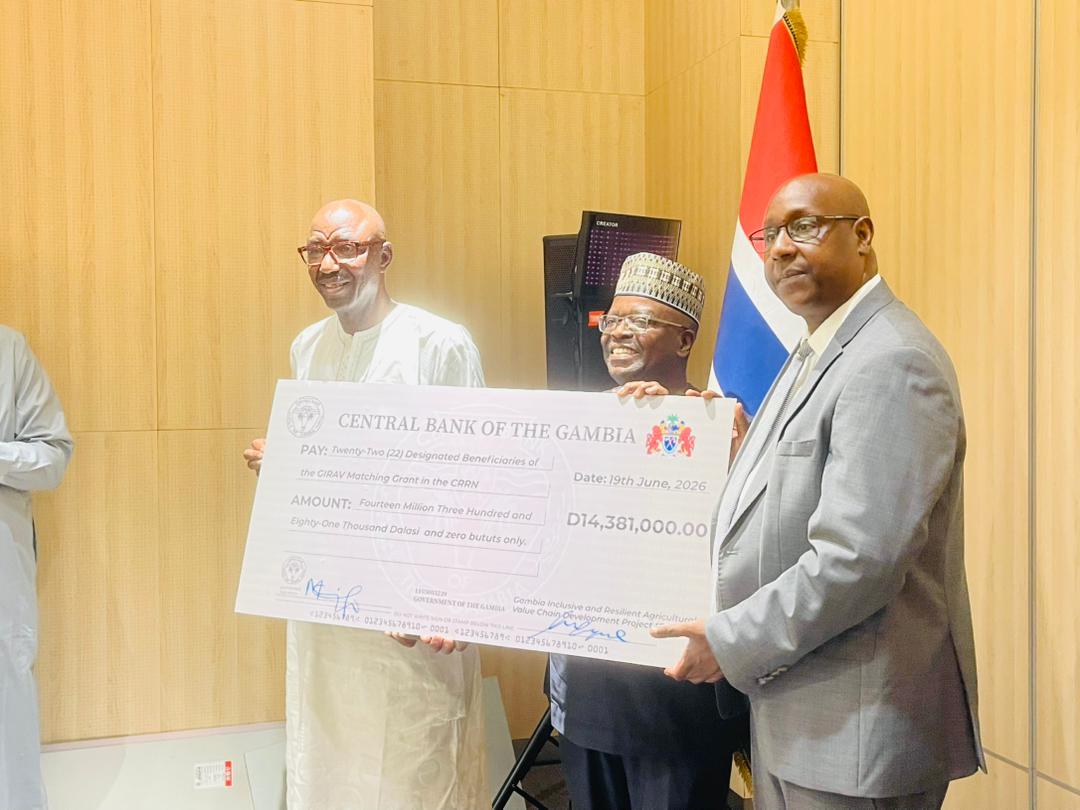
In the latest round, 188 individuals and 26 groups received support worth approximately US$2.13 million (over D156 million), with the GIRAV Project covering 80 percent and beneficiaries contributing 20 percent through partner microfinance institutions. The grants will finance farm machinery, processing equipment, poultry houses, boreholes, tricycles, and mini-vans to boost productivity and minimize post-harvest losses. A total of 1,208 applications underwent rigorous selection before the 214 successful recipients were approved.
Sabally thanked the World Bank for its steadfast partnership and called on beneficiaries to leverage the opportunity for personal and national development.
Representing the awardees, Samba Faye, CEO of Plantation Nurses—a green climate enterprise producing over 500,000 seedlings for smallholder farmers—expressed gratitude. “This support will go a long way in helping our businesses to grow and also improve the livelihood of our people in the country,” Faye said.
The ceremony brought together government officials, development partners, financial institutions, farmer organizations, and diplomats, underscoring the collaborative effort to transform The Gambia’s agricultural sector. With its focus on resilience, inclusion, and innovation, GIRAV continues to position agriculture as a cornerstone of the country’s economic growth and food sovereignty.