By Alieu Ceesay
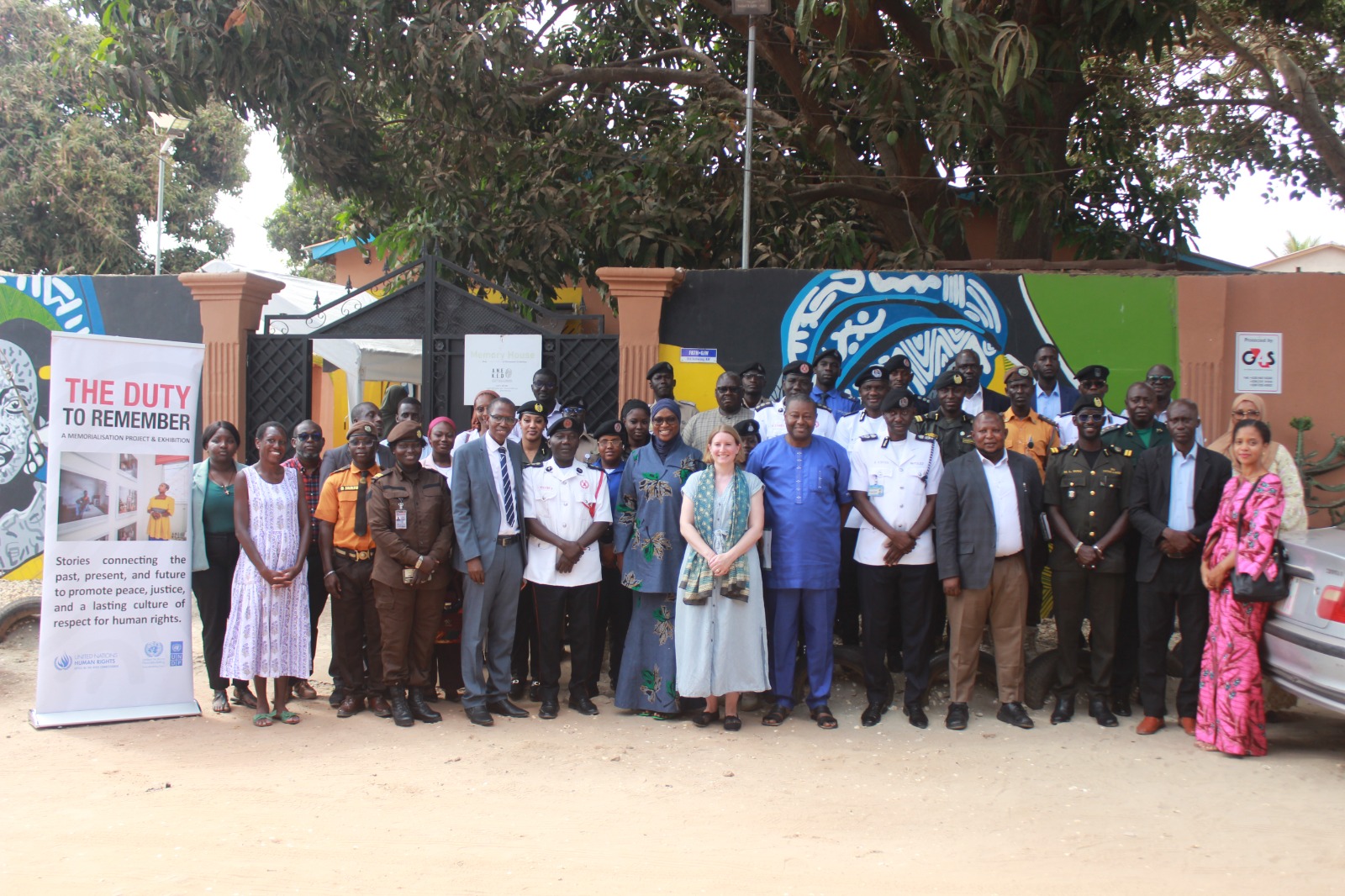
The African Network against Extrajudicial Killings and Enforced Disappearances (ANEKED), in collaboration with the National Human Rights Commission (NHRC), the Office of National Security (ONS), and the University of The Gambia Centre for Transitional Justice and Sustainable Peace (UTG-CTJSP), on Monday kicked off a major training workshop on Human Rights and Security Sector Reform.
The initiative brings together security officers from across The Gambia’s security apparatus, including the Gambia Armed Forces, the Police, the Immigration Department, and the Prison Service. Organizers say the workshop represents a critical step in embedding human rights principles within the country’s security institutions and advancing the recommendations of the Truth, Reconciliation and Reparations Commission (TRRC).
Sirra Ndow, Country Director of ANEKED, said the network was founded by victims and families who suffered extrajudicial killings, enforced disappearances, and arbitrary detention. She stressed that past abuses occurred when security forces lost sight of their constitutional mandate.
“Our reality demands a people-centered approach to reform,” Ndaw told participants. “Security is not simply about equipment, laws or institutions. Security is essentially about people’s security. It is about protecting human dignity, building trust between citizens and institutions, and ensuring that never again will any Gambian fear the very institutions meant to protect them.”
She added that genuine reform requires learning, reflection, dialogue, and institutional transformation beyond policy documents.
NHRC Chairman Emmanuel Daniel Joof described the training as timely and a demonstration of shared commitment among state and non-state actors.
“Sustainable peace and security cannot be achieved without respect for human rights and the rule of law,” Joof said. “Equally, human rights cannot flourish where security institutions lack public trust or cannot effectively perform their mandate. Security and human rights are therefore not competing interests.”
Joof emphasized that the TRRC’s findings highlighted the devastating consequences when state institutions operate without accountability. He noted that under the previous regime, security officers were at times both perpetrators and victims of human rights violations, underscoring the urgent need for cultural transformation within the security sector.
“ The objectives of security sector reform go beyond institutional restructuring,” he added. “It is about transforming institutional culture.”
Mulai Colley of the Office of National Security echoed these sentiments, saying true reform cannot succeed through legal frameworks alone.
“True reform requires a transformation of culture, memory and practice,” Colley stated.
Over the coming days, participants will engage with six interconnected modules covering the foundations of security sector governance and reform in The Gambia, civil society engagement, coordinated transitional justice approaches, and strategies for normalization and non-repetition of violations.
The workshop is seen as a direct response to the TRRC’s recommendations on security sector reform, human rights training, civic education, accountability mechanisms, and guarantees of non-repetition.
Organizers hope the training will equip officers with the knowledge and skills needed to foster a professional, accountable, and rights-respecting security sector that enjoys public confidence.